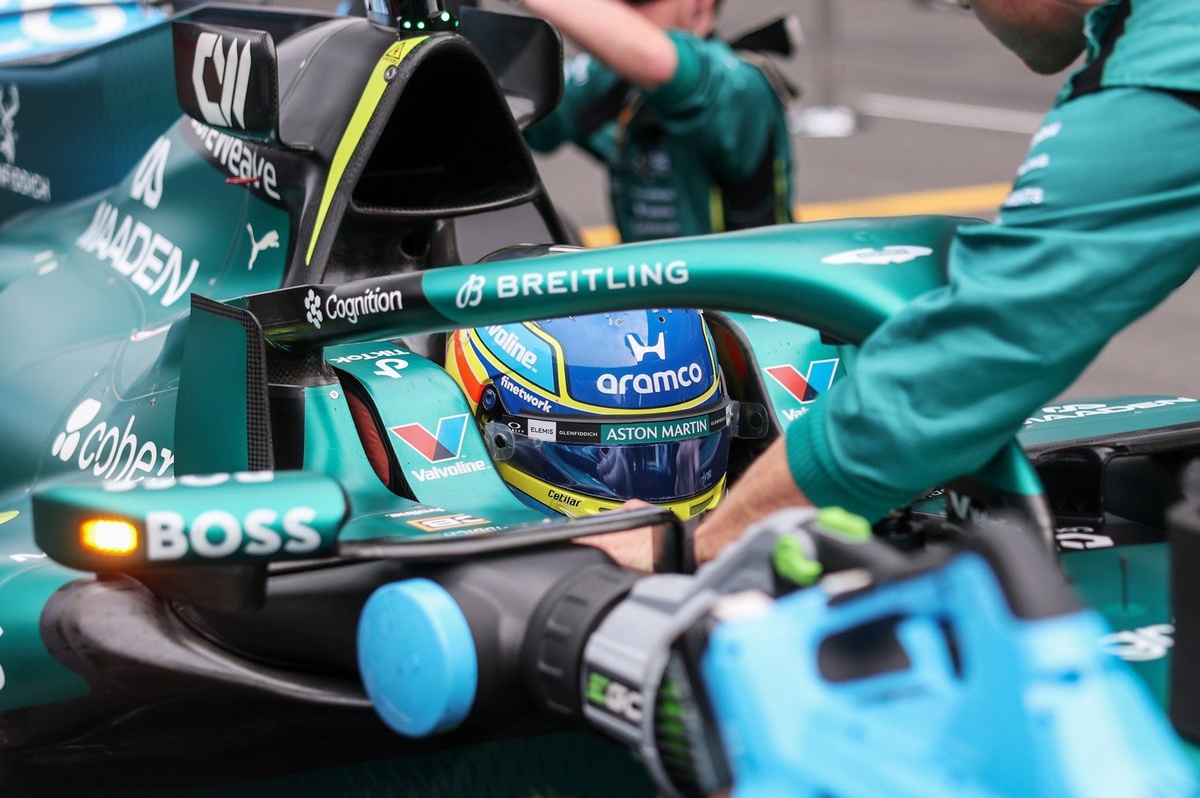
During a recent Formula 1 race, Fernando Alonso faced a significant challenge caused by the vibrations from Honda's power unit. The intense oscillations were so severe that Alonso reported losing all feeling in his limbs, highlighting the ongoing issues with Honda's engine reliability and performance.
Honda has been working tirelessly to address the vibration problems plaguing their F1 engines, but progress has been slow. The vibrations not only affect driver comfort but also pose safety risks, as experienced by Alonso. The incident underscores the need for further refinement and testing to ensure engine stability under race conditions.
Alonso's experience brings attention to the broader challenges faced by Honda in their F1 program. Despite advancements, unresolved vibration issues continue to hinder performance and reliability. Teams and engineers are under pressure to develop solutions that can mitigate these vibrations without compromising power output.
In the context of the current F1 season, Honda's struggles with engine vibrations have become a focal point for analysts and fans alike. The engineering team is reportedly exploring various damping techniques and structural modifications to reduce oscillations. However, these solutions require extensive testing and validation before they can be implemented in race cars.
Alonso's incident also raises questions about driver safety and the importance of vehicle ergonomics in high-performance motorsport. Ensuring driver comfort and safety is paramount, especially when dealing with issues like engine vibrations that can impair control and concentration during races.
As Honda continues to refine their power units, the racing community remains hopeful that these vibration issues will be resolved soon. Achieving a reliable and smooth engine performance is crucial for Honda's competitiveness and for the safety of drivers like Alonso. The ongoing development efforts demonstrate the complex interplay between engineering innovation and race-day performance in Formula 1.